


Congrats!
 Congratulations to all the amazing artists and writers and editors who created this year’s award winners!
The Newbery to a graphic novel–first time in history!–and a Newbery Honor to a picture book text. My, my. The committee was very avant garde this year. Love it! Cheers to all!
Read More
Fingers Crossed
 The choice of an artist really creates a picture book–it doesn’t truly exist until art and words come together. The lovely and talented Erin Robinson is considering illustrating one of my picture book manuscripts at the moment. With her it would be a dreamy, rich, poetic, evocative, emotional book. Keep your fingers crossed, everyone–I really want to see the book that would result from her art and my words!
You Can Never Go Back
So many wonderful lines in this amazing essay by Anya Jaremko-Greenwold, I can’t keep myself from quoting:
I’d trade sex and booze and wisdom—all the best parts about being Grown—if I could have back [childhood]. Colors brighter, smells stronger, days bleeding on forever, and oh . . . reading. In childhood, there’s almost nothing to keep you from reading.
Kid’s books are where I personally learned most everything important about the world: About rape and sinister men from Beatrix Potter’s Jemima Puddle-Duck; about eroticism from Sendak’s In the Night Kitchen; about feminism from P.L Travers’ maverick goddess Mary Poppins; about loss and the unceasing progress of time from E.B. White’s Charlotte’s Web.
And lots more. Go read it!
Read MoreYou Can Never Go Back: On Loving Children’s Books as an Adult
Politics of the Nobel Prize
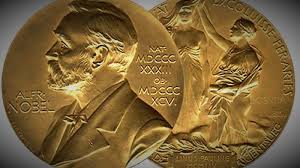 Venturing into adult literature, which is somewhere I rarely go (there’s just too much good kid lit out there). But this is an issue that turns over and over in my mind.
Peter Handke, who won the Novel Prize for literature this year, is…a pretty awful person. An apologist for genocide. A defender of a murderous dictator. They say he’s a very good writer and I’m not arguing; I’m sure he is. But should someone like this win the very highest prize we can offer?
Two editorials in the New York Times offer two different views. I was entirely convinced by both of them, which is kind of impossible.
Bret Stephens laments that “we live in an age that is losing the capacity to distinguish art from ideology and artists from politics” and affirms that Handke’s “art deserves to be judged, or condemned, on its artistic merits alone.” And I find myself nodding. Some people with vile beliefs have written excellent novels. I keep Roald Dahl’s work on my shelves, despite his anti-Semitism and his misogyny. I appreciate Laura Ingalls Wilder’s perfects turns of phrase and eye for landscape, even while I wince away from her views of Native Americans.
Aleksandar Hemon points out that a writer who denies genocide enables and upholds it and makes the next mass murderer that much easier. He asks us to consider whether “a page of Mr. Handke is worth a thousand Muslim lives.” How can I argue? Handke did not just vote for policies I dislike. He lied about slaughter. He lied about guilt and innocence. How can a man with no grasp of moral truth be even a decent writer, let along a great one?
If there’s a middle ground here, it’s a shaky one that I feel uneasy standing on. But let’s say there’s a line between censoring a writer’s work (nobody is advocating that, by the way, Bret Stephens, and you shouldn’t have implied it) and giving him the higher honor we can award. There also a line between being (say) a grumpy and unpleasant human being and enabling and applauding mass murder.
Those lines must cross somewhere. We won’t ever agree on exactly where. But it’s always my belief that there are multiple books and multiple authors, every year, who could win awards. The idea of the single best book of the year, of any year, is a fantasy. There are so many good books; there are so many great writers.
Do we have to give our highest award to one who can’t acknowledge that truth exists? That genocide happened? That Muslims died?
Really, there wasn’t anybody else?
Read MoreSarah L. Thomson
A children’s book author publishing award-winning nonfiction, poetry, picture books and novels including…

“Thomson focuses on newfound connection, magic, and suspense to conjure a fast-paced, heartwarming mystery. Thomson’s world is populated by resourceful protagonists, fanciful creatures, and quirky supporting characters.”
—Publishers Weekly